Holiday Survival Tips for Neurodivergent Families: Prioritizing Peace, not Perfection

Real talk, Mamas!? Holidays are often overwhelming for kids and families like ours - all the bright lights, loud music, unfamiliar textures, and schedule changes have us counting down the days until it’s all over. But there are ways to navigate it and support regulation (for our kids and us!). I am sharing some of what we lean into continually for our family:
1. Prioritize Predictability & Preparation: We create a sense of control and calm by preparing Nai for what’s coming, and you can, too. Try social scripts & visual schedules: Before the next event (school play, visit to Santa, etc.), create a simple social story and visual schedule. We use Nai’s AAC device for social stories.
You could also ask your child’s teacher / speech therapist to help create a social story (paper & digital version for accessibility). We love the app Choiceworks for creating a visual schedule on a phone and/ or tablet.
For Ex. - "First, we will drive to Grandma's. Then, we will hug her. Next, we will eat. After that, we will open one gift. Then, we will go home."
2. Traveling / Visiting a New Place: If you all are visiting a new place, or traveling to visit family, talk (or use their AAC device) to discuss who they will see, what kinds of sounds they might hear, etc. Again, creating a social story (either on their AAC device, of your child uses this or on another electronic device) helps them and you mentally prepare by lowering the brain’s "alert" response.
3. Mindful Time-Blocking: It’s OK to avoid marathon holiday events, Mamas. We don’t have to give into the pressure of doing it all, all at once. Take sensory breaks whenever they are needed (remember to have your sensory support tool kit with you always - a backpack is a great way to stay organized).
Instead of staying at family / friends houses until the gathering ends, instead you could say: "We will stay for as long we are able.” This honors your family’s capacity, and moves away from the tendency we have as caregivers to people please.
4. Sensory "Regulation Station" at Home: Dedicate a corner in your kid’s room for a sensory regulation station at home and add in all their sensory support tools, for example -
* Weighted blanket or lap pad
* Noise-canceling headphones
* Fidget toys, tactile balls, or chewing gum/chewelry
* Fav. books, and tools for painting / drawing (if that resonates with your kid)
On-the-Go Sensory Support Kit: Carry a backpack with their favorite sensory regulation tools. This bag is their safe space in physical form.

5. Proactively Manage Sensory Input: We cannot shift how the world celebrates holidays, but we can dial down the intensity of sensory input for our kids.
Loud Sounds: Loud Christmas music and excited crowds
Sensory Support: Invest in good noise-reducing or canceling headphones. Root in calm with soft instrumental music (like lo-fi or classical) at home. Bluetooth headphones are a go to for us at home with Nai after being around crowds.
Too Much Visual Input: Flashing lights, shiny décor, and crowded stores
Sensory Support: When looking at lights, encourage your child to wear sunglasses, or look through the car window. Choose one focal point instead of scanning the whole room (mindfulness technique). When you all get home, go upstairs to their room, turn down the lights, and get under a weighted blanket to recharge / recover.
Tactile: Scratchy holiday clothes and / or hugging unfamiliar relatives
Tactile Support: Always prioritize comfort — we use soft, tag-free clothing. Tell relatives / friends ahead of time that your kid will greet in whatever way feels comfortable - hugs, shaking hands, using their AAC device, etc. I like to explain that some forms of touch such as a heavy or unexpected hug are too much for Nai at times.
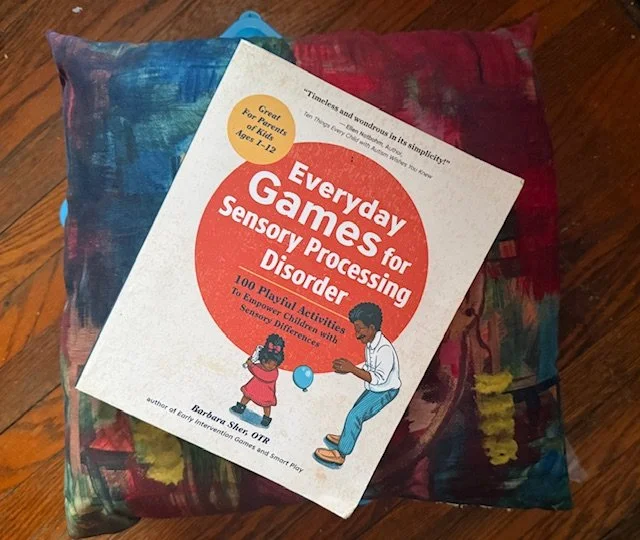
Check out Everyday Games for Sensory Processing Disorder (100 different activities)