Name the Zone, Support the Zone: A Practice for Parent Caregivers
Some days disability parenting feels like navigating an invisible minefield of triggers only you can see, hear and feel. Most people are blissfully oblivious, especially parents raising neurotypical kids. Their lived reality and ours are like existing on opposite planets, and there are moments when the heaviness simply pummels us. We’re expected to advocate without accepting our own limits, sit through some of the toughest times in ER rooms, IEP meetings, doctors visits, and therapy sessions while holding on with a seemingly insurmountable steadiness of spirit.
All the while the triggers are there - a world that repeatedly refuses to fully see our kids; the parent telling their kid to shut up because “they talk too much,” when your kid struggles to communicate; maybe they are eating ice cream, or some other food without an allergic reaction, and your mind spins into how relentlessly you read labels for your kid’s well-being.
Maybe you can relate to the trigger we experience almost daily - watching other parents walk down the street with their kids without an ever-present fear of that rapid take off; and before you know it, you’re sprinting after them, desperate for some semblance of safety.
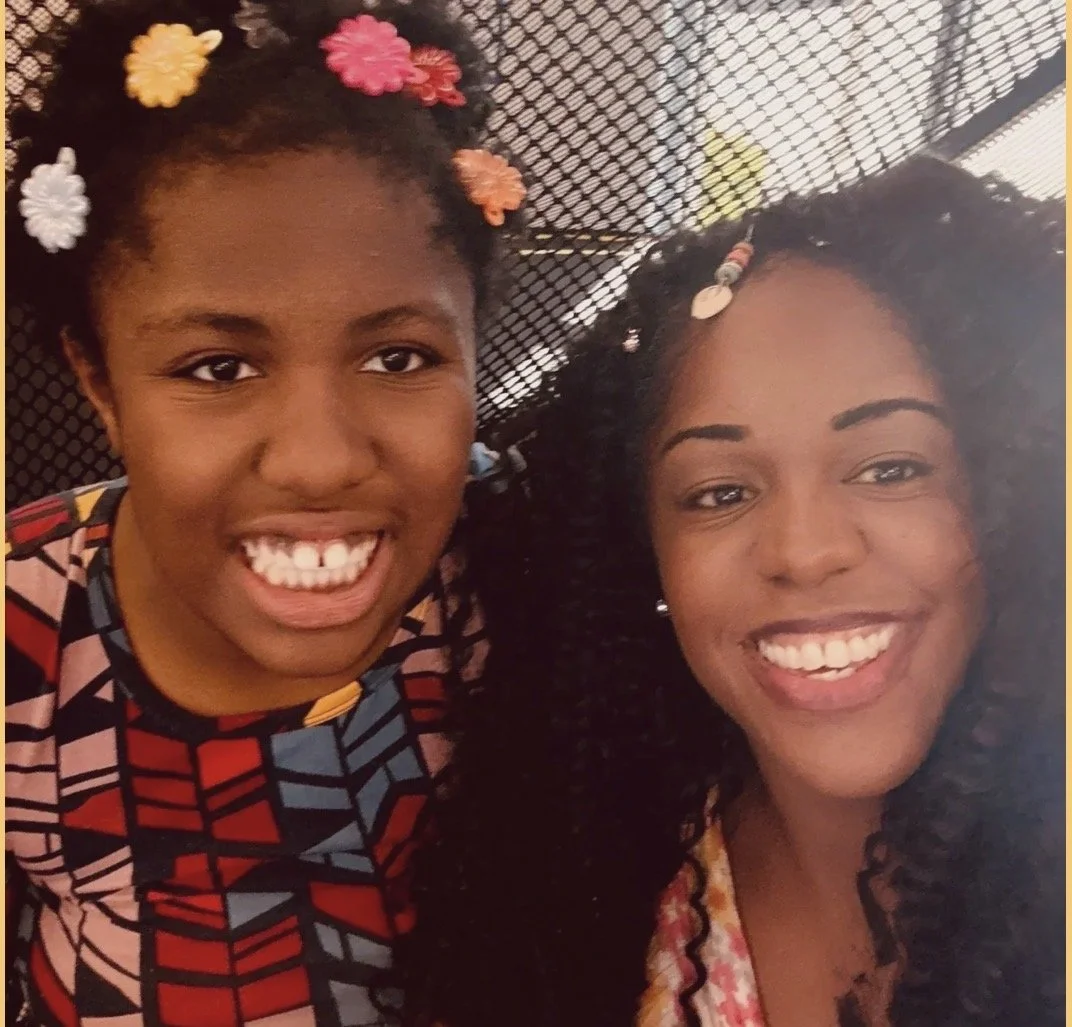
Our daughter Nai has high support needs, and is diagnosed with autism and ADHD (and I suspect PDA is there in the mix, too). We weave in and out of challenging seasons - lack of sleep or oversleep, heightened anxiety / OCD, and wandering (rarely, but a recent experience with it has our family on edge).
We, like millions of other families raising neurodivergent kids, hold onto cautious hope with every medical and educational intervention, steep in moments of joy and hard-won progress, while riding waves of grief, isolation and exhaustion.
We can affirm neurodiversity and accept our kids’ disabilities, the unique ways they contribute to the world while also admitting we long for ease — these simultaneous truths can co-exist. I see more Mamas writing about this across multiple online spaces, the duality of neurodivergent parenting, and it’s a relief - because for too long, we have swallowed what must be spoken.
Some days I see the toll on both of us before Nai is off to school - shoulders climb near our ears and heavy sighs; Kes and I have an unspoken agreement - focus on the immediate goals - Nai’s preferred clothes, socks and shoes assembled before drive her off to school. It’s rarely a quick or seamless process, although knowing the drill makes weathering ebbs and flows somewhat easier.
Our bodies practically collapse into the car seat after Nai heads into the building. Part of it is the exhaustion of the day-to-day lived reality of existing within systems, and a society not built for us - continually advocating, educating, etc., but it’s also the impact of all these endless triggers on our nervous system.
In mental health terms, as Crystal Raypool writes for Healthline, “a trigger refers to something that affects your emotional state, often significantly, by causing extreme overwhelm or distress.” Not unlike many parents raising disabled kids, triggers and trauma are part of the invisible load we carry.
Lately, whenever Kes or I hear doors open downstairs, our voices crack with urgency as one of us spits out a familiar question - Is Nai with you? Where is she? Although Nai’s slowed down some in recent years, she’s still a movement ninja (lol)! We cannot EVER take our eyes off of her. The toll of remaining in such a heightened state of alert, 24/7, is largely unseen by society, and sadly, even doctors and health practitioners caring for families like ours; we become patients they process, not people whose lived experiences they actually hear.
But
our
bodies
minds
and
spirits
do not forget. We carry it all.
Understanding Hyper vigilance through Window of Tolerance
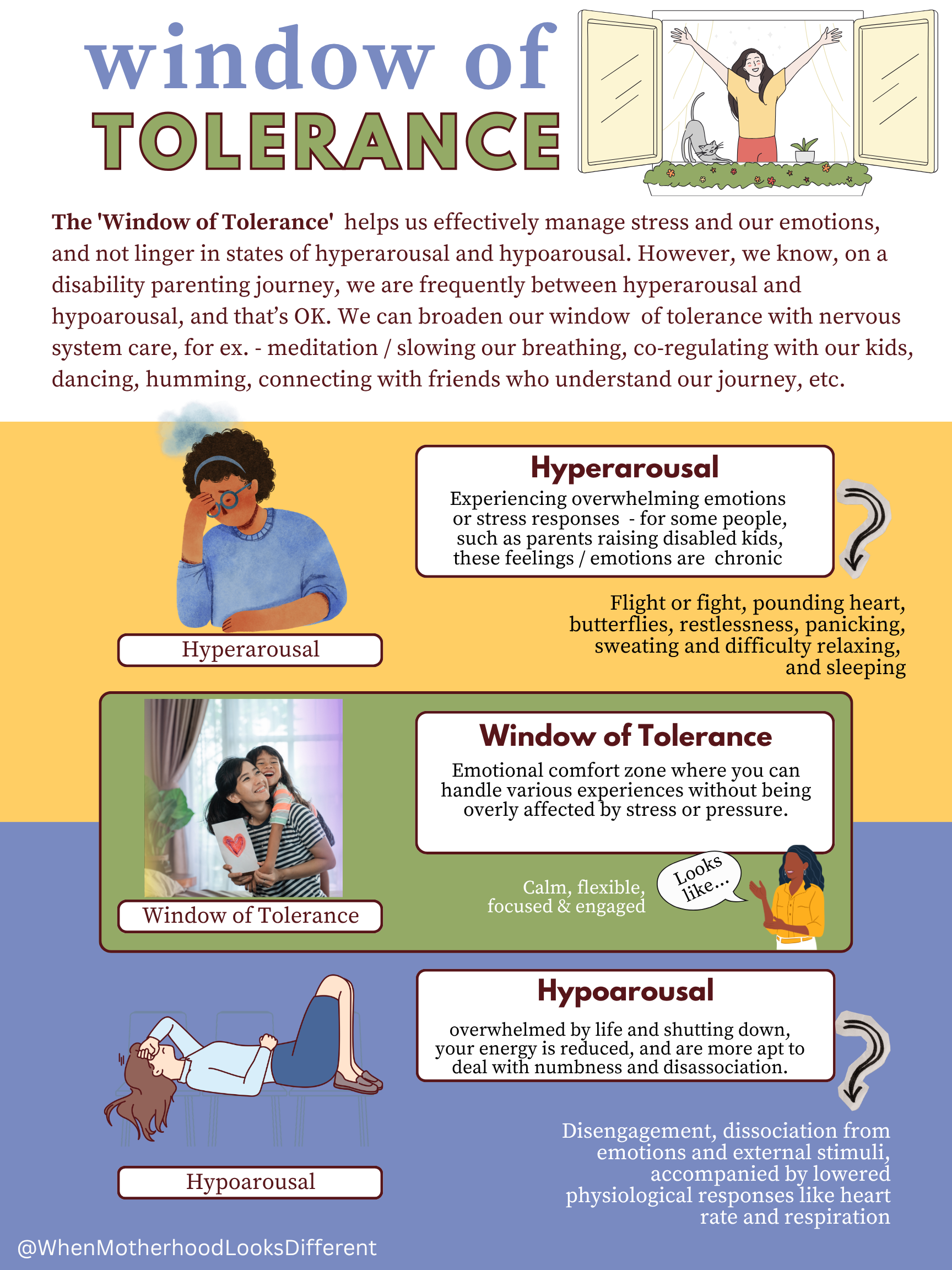
Earlier this year, I started to learn more deeply about the window of tolerance a “term coined by Daniel J. Siegel, a clinical professor of psychiatry at the UCLA School of Medicine, describes the optimal emotional “zone” we can exist in, to best function and thrive in everyday life.
There are three primary zones, according to Siegel -
Unseen, a recent documentary about parents raising kids with disabilities / complex health needs, shares some stats about caregiving that are rarely acknowledged, including “an estimated 16.8 million people in America are caring for a child with disabilities.” And the demands of 24/7 caregiving take a
toll on well-being: “43% of parent caregivers report experiencing high stress, 30% say caregiving has worsened their health, and 26% of parent caregivers report their health is fair or poor (compared to 13% of the general adult population),” you can check out the sources for these stats here.
Working with Triggers through the Window of Tolerance
Triggers, overwhelm, exhaustion, and all the emotions / feelings we move through as parent caregivers are not going anywhere; but we can learn to work through them in a way which supports us - mind, body and spirit, including tending to our nervous system. I want to share a short practice with you all, and a window of tolerance support kit to help in the midst of day-to-day challenges, and caregiver affirmations to remind you, you are not alone:
Name the Zone: Yes, you feel internally whether you are overwhelmed, frustrated, checked out, etc. But naming the state we are in helps us to stop pushing through we can at least begin to process what we’re feeling. Kes and I have started communicating this to one another - hyperaroused or hypoaroused, and then we know how to show up for ourselves and one another.
Support the Zone: For the last several days, I’ve been in the hyper arousal zone a TON - from Nai’s heightened anxiety to her adjusting to a full time schedule; all of it has left me on edge. Kes knew I was in this zone, and urged me to rest after he came home and took over with Nai; it was the best decision - no screens, no texts, just an hour or so of rest. Maybe supporting yourself through hyper arousal looks like listening to soothing music on blue tooth headphones or co-regulating with your child through dance, or unstructured play. You could also make a mental note to take some more intentional time before falling asleep, or, if by some miracle, you can wake up a few moments early; whatever nourishes you.
Caregiving Mama Affirmations: Sometimes we need a word of encouragement from another Mama who is in the trenches! I recorded these Caregiving Mama affirmations a few years ago, but the words, heart, and intention behind them remain relevant; may they speak to your spirit.
Listen here.Window of Tolerance Support Kit: What I am sharing with you are not tools I simply read about — this support kit comes from the lived experience of parenting our beautiful neurodivergent daughter Nai, who is high-support needs — autistic and ADHD. You'll leave with a breakdown of the window of tolerance, how to identify the zone you're in, and questions to help you support yourself through it all. I have also
Inside, you'll find:
Step 1: Check In — Where Am I Right Now? Read each zone and circle the one (or ones) that feel most like you right now — hyperarousal ("I'm running on high alert"), hypoarousal ("I've shut down"), or the window of tolerance ("I feel grounded").
Name Your Triggers (Your Words, Your Reality) — hearing a parent tell their kid to "shut up" because "they talk too much," when our kid struggles to communicate; seeing other parents walk down streets with their kids without fear of wandering or elopement. Naming our triggers isn't weakness; it's emotional honesty.
Step 3: Grounding Ideas That Fit Our Reality — intentional breaths, movement breaks, soothing music, and talking with other moms who get it, along with examples of different sensory anchors to tap into. If you are not familiar with sensory anchors, I love this definition from Indi Glow Living: “Simple, body-based practices that help you lower the noise and interrupt the physical reaction to being overwhelmed. One focused sensory cue such as sound, touch, scent, sight, breath, temperature, or movement helps you reconnect to the present moment with more clarity.”Connection is regulation — you don't have to navigate the minefield alone.
Gentle reminders at a glance — for widening your window over time.
Snag your Window of Tolerance Support Kit for neurodivergent parents.